


.png)
Cow’s Milk Protein Allergy (CMPA): What Parents Need to Know (2025 Guide)
- Admin
- Nov 30, 2025
- 4 min read
By The Test Clinic — UK Experts in Baby & Toddler Intolerance Testing

Introduction
Cow’s Milk Protein Allergy (CMPA) is one of the most common feeding issues affecting babies in the UK.Yet despite how common it is, CMPA can be confusing, overwhelming, and often misunderstood — especially when symptoms overlap with reflux, colic, constipation, or eczema.
At The Test Clinic, we’ve supported thousands of parents navigating milk-related feeding issues, and we see one thing consistently:
Many babies diagnosed with CMPA also react to other common ingredients in formula — such as sunflower oil, rapeseed oil, coconut oil, soya, egg, or fish oils.
This means that even after switching formulas, symptoms may continue.
This guide explains what CMPA really is, how to recognise it, and how you can use your baby’s intolerance profile (plus our first-of-its-kind Formula Comparison Guide) to make better feeding decisions.
What Exactly is CMPA?
CMPA stands for Cow’s Milk Protein Allergy, which occurs when a baby’s immune system reacts to the proteins found in cow’s milk — typically casein or whey.
There are two main types:
1. IgE-Mediated Allergy (Immediate Reaction)
This is the “classic allergy” reaction:
Hives
Immediate vomiting
Swelling
Wheezing
Anaphylaxis (rare)
These reactions are quick (within minutes).
2. Non-IgE CMPA (Delayed Reaction)
This type is far more common — and often harder to recognise.
Symptoms appear hours or days later, and can include:
Reflux
Eczema
Constipation
Diarrhoea or mucus in stools
Persistent crying
Bloating or gas
Feeding discomfort
Poor sleep
Nasal congestion
Skin rashes
This delayed pattern leads many parents to believe it’s “colic” or “normal baby behaviour.”
But often, it can be CMPA.
🧪 Why CMPA Is Often Missed or Misdiagnosed
Many babies with CMPA do not present with dramatic symptoms. Instead, they experience:
Ongoing fussiness
Chronic reflux
Eczema
Green or mucus-filled nappies
Difficulty feeding
A “not settling” pattern that parents can’t explain
Whilst GP's often diagnose babies with CMPA, they typically respond by prescribing one milk-based formula after another:
Aptamil → SMA → Cow & Gate → HIPP → Comfort → Anti-Reflux → Lactose-free → Pepti → Nutramigen … and so on
But here is the key issue:
❗ Most of these formulas STILL contain milk proteins
Even hydrolysed formulas (like Aptamil Pepti 1) still contain cow’s milk — just in smaller fragments. This is why symptoms often continue.
🍼 CMPA vs Lactose Intolerance — They are not the Same
Many parents get confused here.
❌ CMPA is a protein allergy
The immune system reacts to milk proteins.
❌ Lactose intolerance is a sugar issue
This is generally rare in babies and not the cause of reflux or eczema. That is why a lactose-free formula may NOT help a baby with CMPA.
Where our Baby & Toddler Intolerance Test Helps
While we do not diagnose IgE allergy (which requires NHS allergy clinics), our test excels at something GP's and hospitals rarely look at:
👉 Identifying the ingredients your baby may be sensitive to including:
Cow’s milk
Soya
Sunflower oil
Rapeseed oil
Coconut oil
Fish oil
Egg
Other common formula additives
This is vital because:
❗ A baby may react to milk and one or more of these other ingredients
So even when switching to a CMPA-friendly formula, symptoms can continue.
Our test helps parents understand the full picture — not just milk sensitivity.
CMPA-Friendly Formulas (And Why They Do not Always Work)
There are three categories GP will usually prescribe:
1. Comfort / Gentle / Anti-Reflux Formulas
❌ Still contain cow’s milk
❌ Not always suitable for CMPA
❌ Often mask symptoms temporarily
2. Hydrolysed Formulas (e.g., Aptamil Pepti 1)
❌ Still contain milk
❌ Often contain porcine-derived enzymes (not halal/kosher)
❌ Some babies still react
3. Amino Acid Formulas (e.g., Neocate, Puramino)
✔ These are cow’s-milk-free But…
❗ They often contain sunflower, rapeseed or coconut oil
❗ Many babies react to these too
This is exactly why intolerance testing can be so helpful and why we created:
The UK’s first Baby Formula Ingredient & Allergen Guide (2025)
We created the UK’s first full baby formula ingredient comparison resource because parents need a clear, honest breakdown of what each formula contains.
You can download it here:

✔ Free 2-Page Quick Guide
Snapshot of top UK formulas + major allergens.
👉 Download the Free Guide
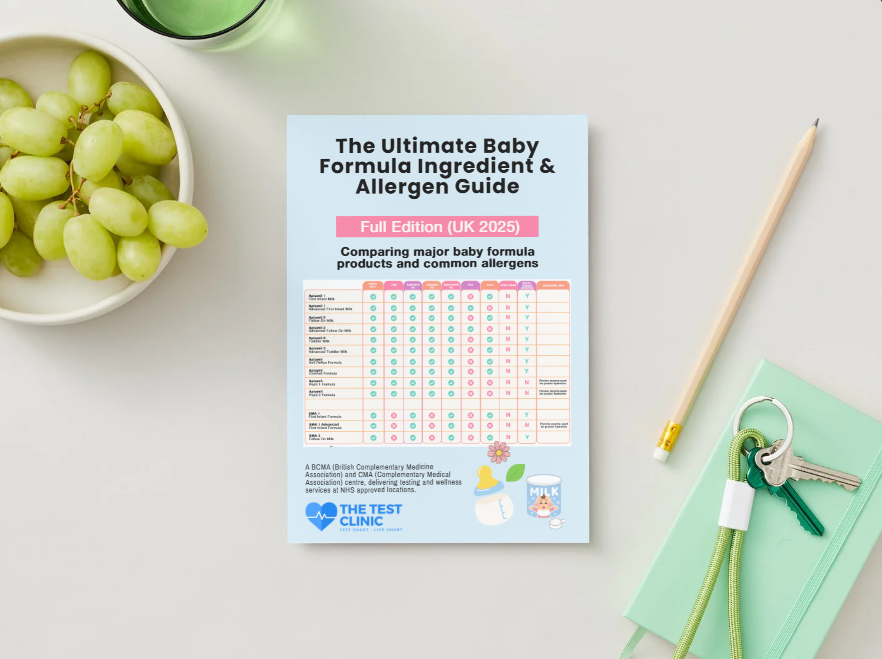
✔ Full 15-Page Guide (£6.99)
40+ formulas, halal/kosher info, allergen explanations, and a printable worksheet.
👉 Get the Full Guide
Does Your Baby Have CMPA or Formula Intolerance?
Here is what we see in clinic:
Babies who react to milk but show additional symptoms (eczema, reflux, bloating, mucus nappies) often have multiple sensitivities, not just CMPA.
Our test helps you answer key questions:
Is milk the only problem?
Or are sunflower oil / rapeseed oil / coconut oil also triggers?
Is soya making symptoms worse?
Is fish oil contributing to eczema?
Which formula ingredients should we avoid?
Which formulas are most compatible with your baby?
These insights save parents weeks or months of trial and error.
Our Baby & Toddler Intolerance Test
If you want clearer answers, our Baby & Toddler Intolerance Test can help you understand what may be behind your baby’s symptoms.

👉 Book a Baby & Toddler Test (order online or visit one of our Clinics)
📘 Before You Try Another Formula…
Be sure to download the FREE 2 Page Summary Guide (2025)
👉 Download the Free Guide


Comments